Spain — Ribera del Duero
Wine trip
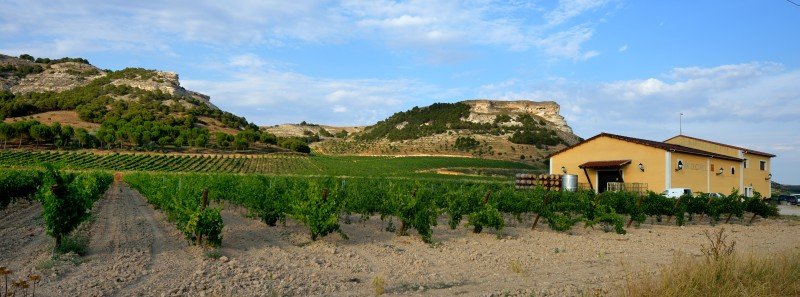
Valdecuriel Bodegas near Peñafiel
A wine holiday in Spain — the Ribera del Duero region
Autumn is an ideal time for a wine holiday in Spain because the harvest and wine-making are in full swing. Here is a description of a small Spanish district where all your senses come alive and where you can get up close to the wine production itself.
Over the past five years we have sampled wines from a small area north of Madrid. The area runs along the upper part of the Duero river and is therefore called Ribera del Duero. Strong wines are made here, often with a scent and flavour of blackcurrant. The whole northern part of Spain sits on a plateau at about 800 metres altitude, making temperatures typically 5 to 8 degrees lower than Madrid — good for both people and wine.
The deep roots of the vines allow them to thrive on most of the slopes along the Duero. The region is only about 1.5 hours north of Madrid, roughly 100 km east-to-west and 50 km north-to-south, yet it is home to well over 50 different wine producers — Bodegas in Spanish.
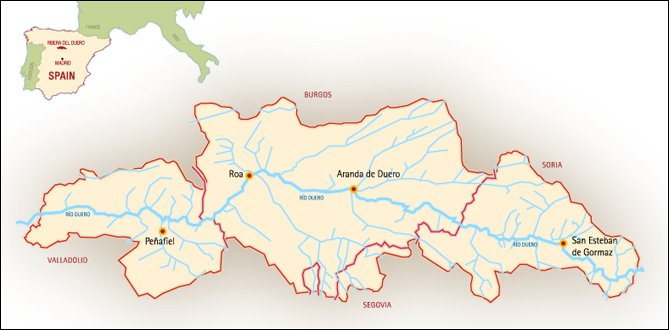
We flew to Madrid, hired a small car, and drove straight up to Aranda de Duero, the main town in the heart of the wine region.
Most tourists in Ribera del Duero come from other parts of Spain, so information in English is sparse. Hotels in the area can usually provide a small printed guide listing many of the Bodegas.
If you have time, it is worth calling ahead to ask when English-language tours are available. At smaller places you may well be met with "No English sorry", but at larger ones there is usually someone who speaks English. A tasting typically costs between 5 and 10 euros depending on how many wines you try.
We took a different approach — we simply drove up to the Bodegas we wanted to visit and asked if we could look around. We were looking for the small producers: not mass production, but places where individual care and the personal touch of the wine-grower comes through in every bottle.
Everyone was genuinely friendly and keen to show and talk about their wines. The level of English varied, but we always managed to get the message. Even a little Spanish goes a long way — people are incredibly welcoming and happy to share.
With a week you can visit a great many Bodegas. I would suggest starting in the eastern part of Ribera del Duero and making your way slowly westward. We based ourselves in Aranda de Duero, about 50 km from the eastern boundary. Two to three Bodegas a day is very manageable. Several places have combined wine production with hotel accommodation.
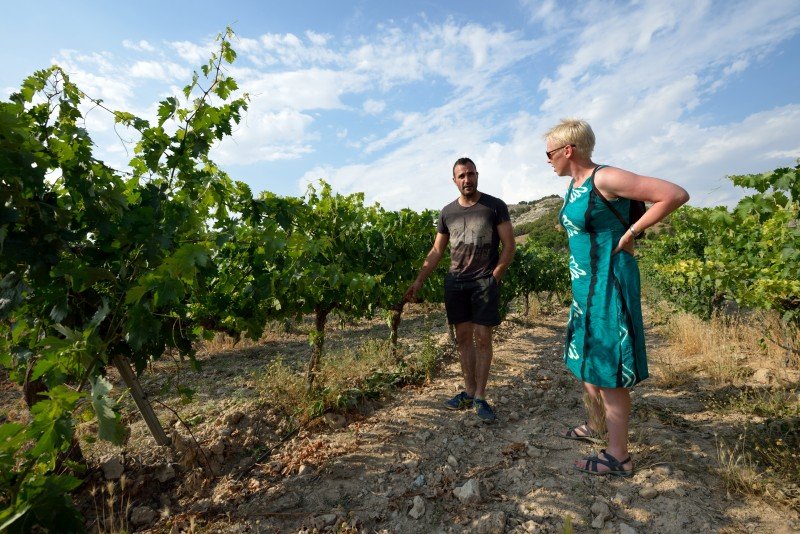
The wine here is very distinctive — powerful, dark, full of fruit, and often with high alcohol. All Ribera del Duero reds must be made from the Tempranillo grape (at least 90%), though small amounts of other varieties are permitted.
Most Bodegas produce at least three quality levels:
- Roble — a young wine aged in oak for 4–6 months
- Crianza — a more mature wine aged for 12 months
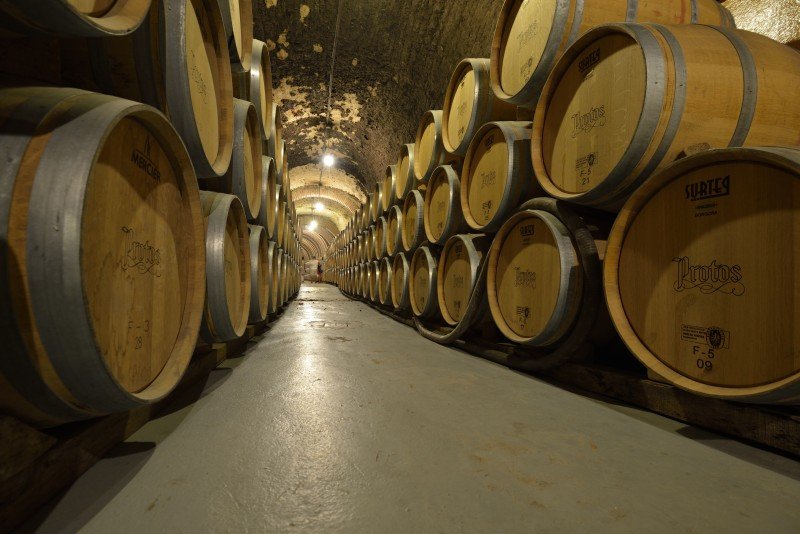
- Reserva / Signitur — the house flagship, aged over 12 months in French oak barrels from the finest grapes
The vines are typically mulched with slate, which absorbs the sun's heat during the day and releases it at night, producing wines that are powerful and full-bodied with little tannin. Some of the finest wine comes from the western stretch between Peñafiel and Quintanilla de Onesimo, where over 35 producers are packed together.
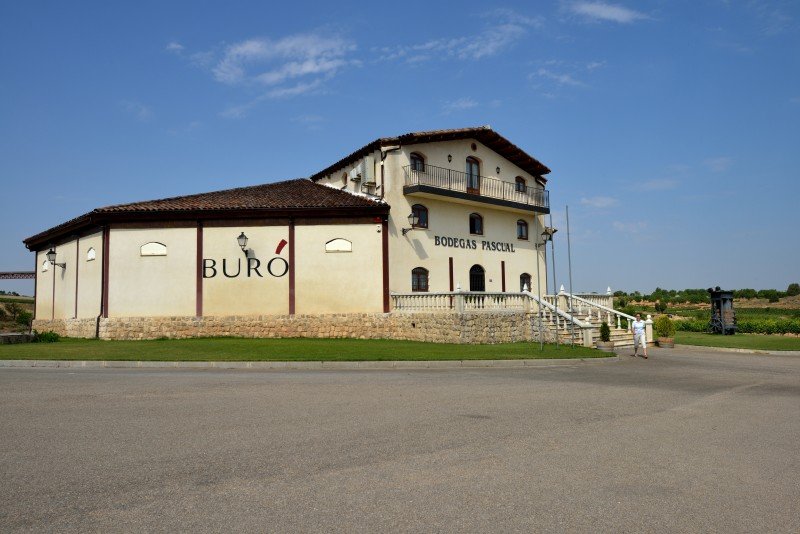
Bodegas Pascual is in the eastern part — a family business with just five employees and 35 hectares of Tempranillo. Export manager Ester Pizarro Abejón showed us around the full production. The highlight was a Buró De Penalosa Crianza: blackcurrant and fresh berry aromas, powerful and fruity, even better after an hour of aeration.
Just west of Aranda de Duero lies Señorio de Bocas, set on a quiet gravel road surrounded by all 20 hectares of its vineyards. Around 120,000 bottles across four reds, managed by just four people. Everything is 100% Tempranillo, and the deep blue labels are instantly recognisable.
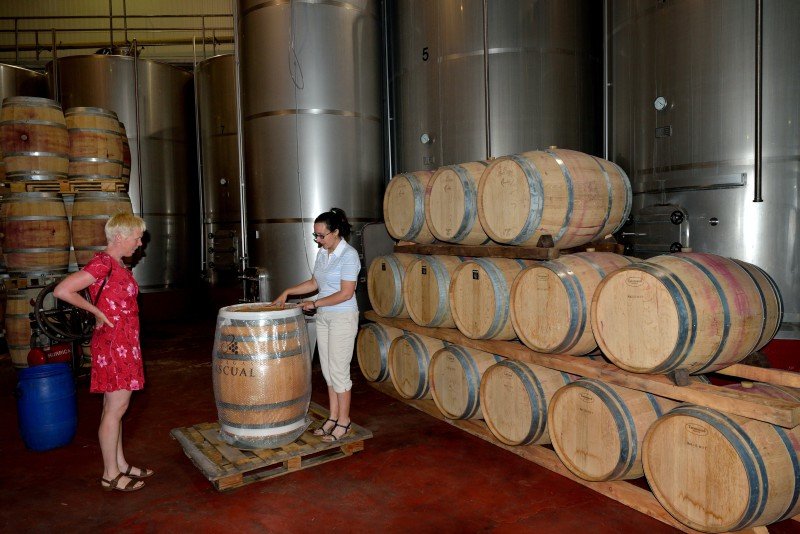
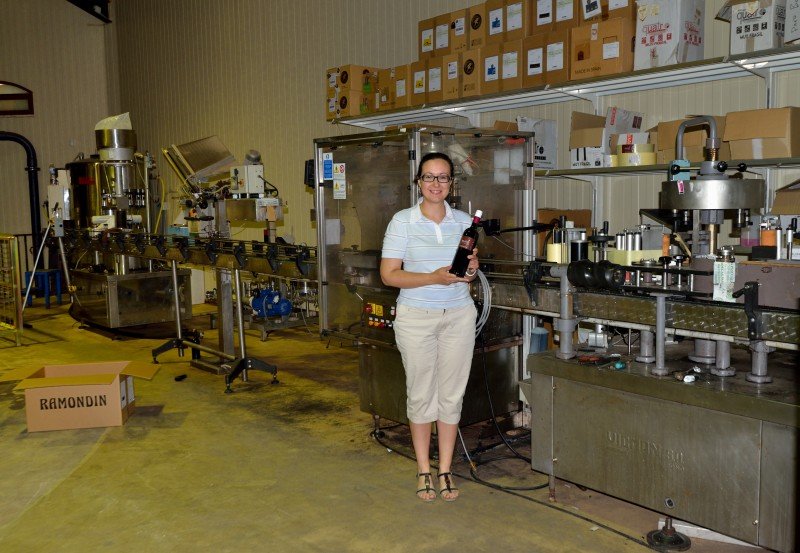
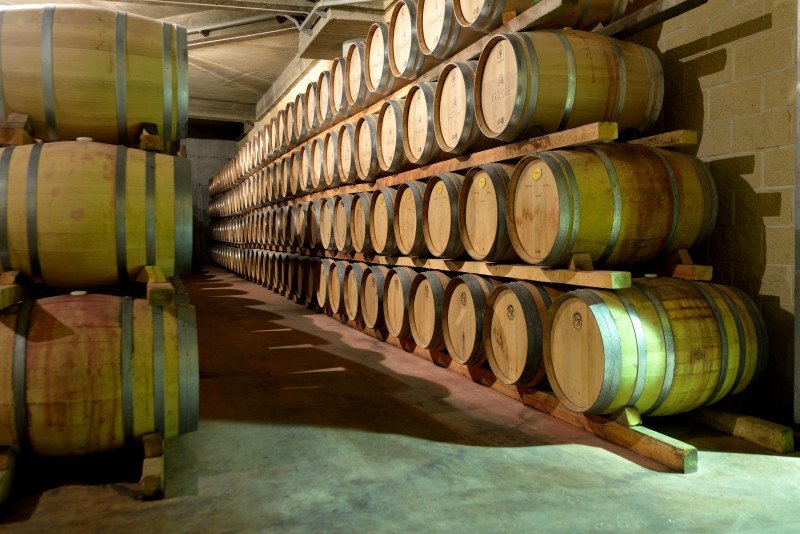
Further west, Bodegas Emina is one of the bigger producers, with more than 2,300 oak barrels from both the USA and France in its cellars. The finest and most expensive barrels are made from French oak. The best wine we tasted was a Matarromera Crianza 2006 — intense aroma and complex flavours of blackcurrant, fruit and a hint of wood, with a very long finish. It sells at the higher end, around 17 euros.
People throughout the region are genuinely helpful. It is clear that the economic crisis hit hard — many producers borrowed money for expansion about ten years ago and could easily handle ten times the current visitor numbers, so you will almost never need to book ahead. A little Spanish, however, goes a long way.
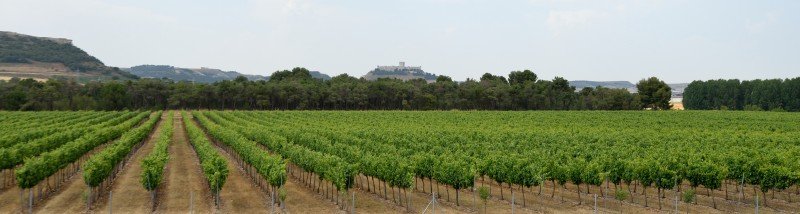
View over the castle at Peñafiel
Just before the western boundary of Ribera del Duero you reach Dominio de Pingus, tucked into a tiny village in some unremarkable buildings. There is no visitor centre; I doubt they accept visits without prior arrangement.
Some of the most outstanding wine from this region comes from the very smallest producers. They have an intimate feel for every individual vineyard — whether to harvest today or wait another three days. Grapes are picked by hand and sorted the moment they arrive from the fields. These manual processes carry through the entire production.
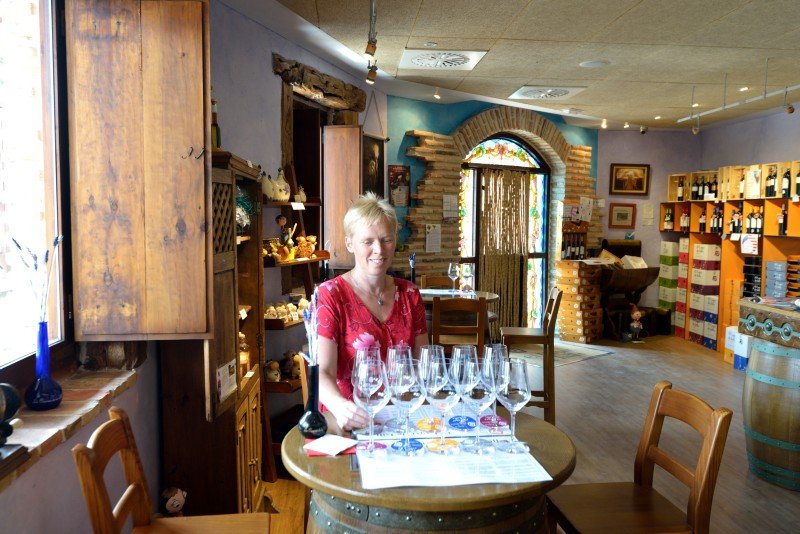
The photo shows what it is all about: tasting the wine. Here we are about to sample five different wines made on the same plots, by the same five people, but from different years and with different ageing.
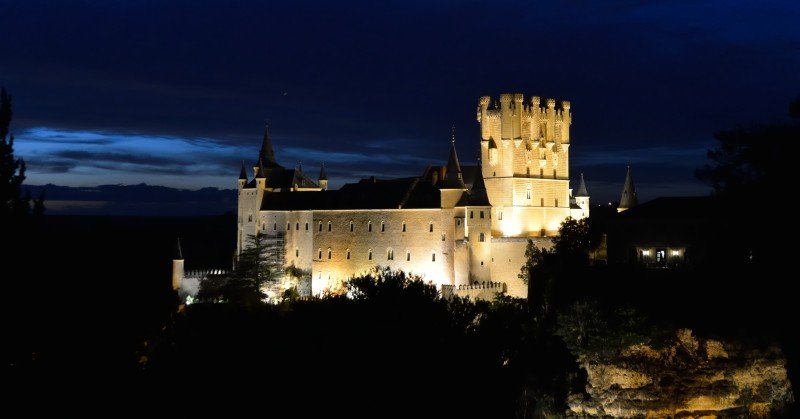
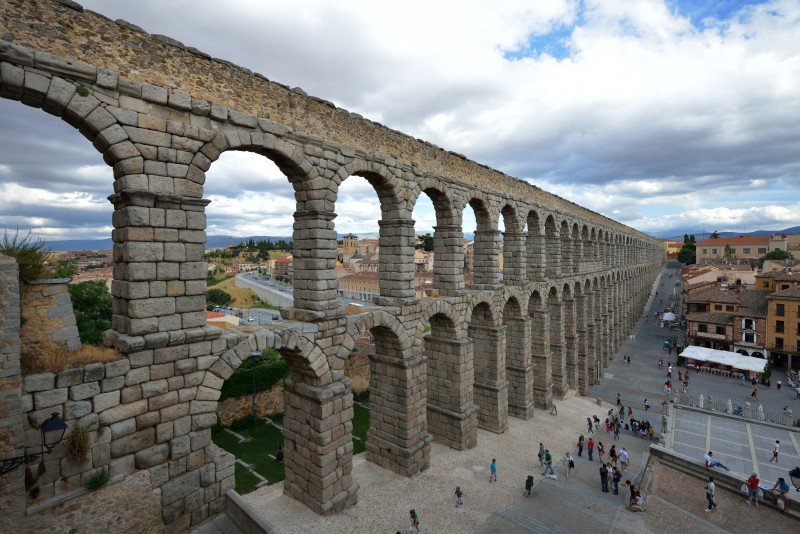
If you are growing weary of wonderful wine and thinking about heading back to Madrid airport, do yourself a favour and spend a day in the breathtaking city of Segovia. The city is filled with castles and cathedrals, and crowned by a 2,000-year-old aqueduct stretching over 700 metres, standing as proudly as if it were finished yesterday.
Segovia sits right on the road between Ribera del Duero and Madrid — make a stop, even if museums and historic buildings are not usually your thing. This city is something quite special.
The two photos show the fairy-tale castle (the Alcázar) on one side of the city and the remarkable Roman aqueduct — built without mortar, every stone simply shaped and stacked on top of the next.
Customs rules: Each adult may bring up to 90 litres of red wine into Denmark for personal use. However, if you arrange for a carrier to transport the wine home, duty must be paid on every single bottle. The current wine duty is just over DKK 11 per litre imported into Denmark.
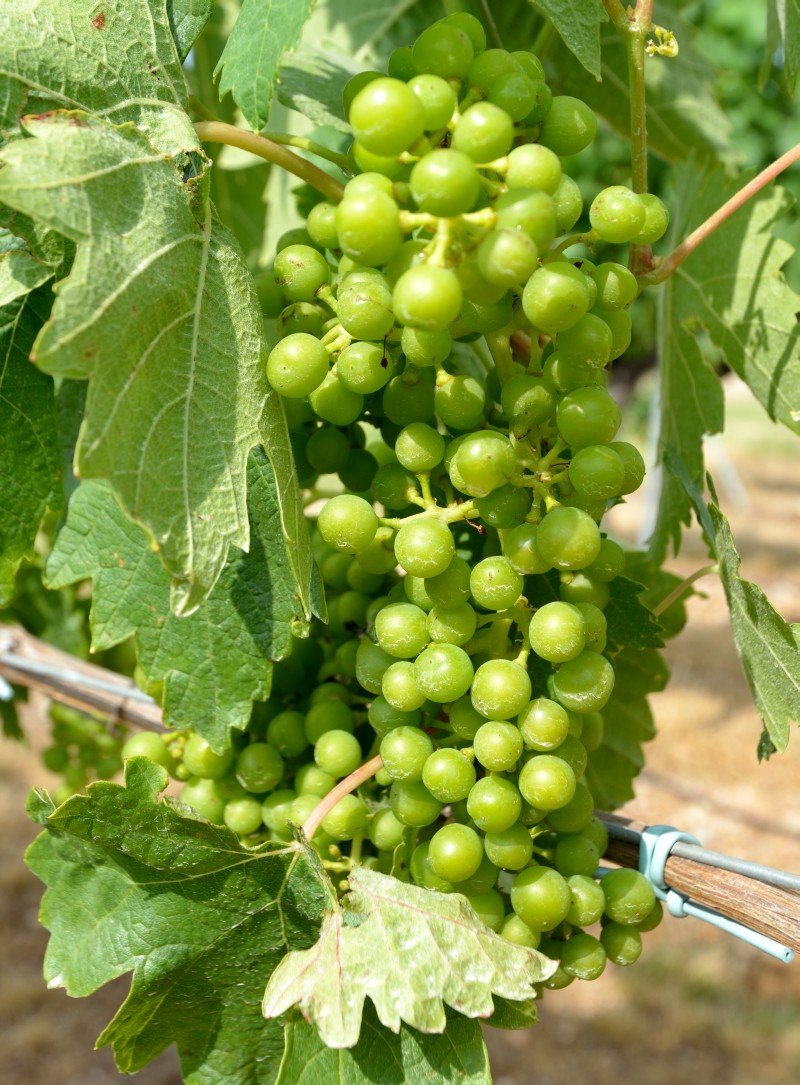
And finally, what it all begins with: the Tempranillo grape, as it looks in midsummer before it starts to turn colour.
Happy travels.
Carl Nielsen